Are you planning to celebrate Christmas in Oaxaca, Mexico, but unsure of what to expect?
While July brings the grand spectacle of Guelaguetza and late autumn belongs to Día de Muertos, December in Oaxaca holds a unique, magical charm. The historical center transforms into a radiant hub of glowing brass lanterns, street parades, warm spiced drinks, and centuries-old artisan traditions.
This comprehensive guide covers everything you need to know about celebrating the holiday season in Oaxaca—including key dates, authentic festive dishes, and essential local tips to make the most of your trip.
What is Christmas Like in Oaxaca?
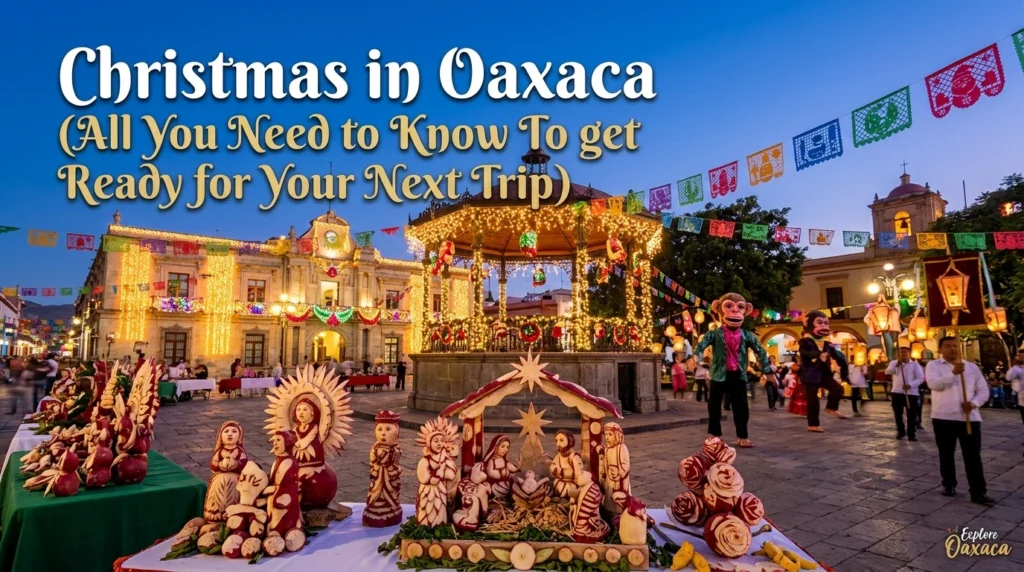
Christmas in Oaxaca is vibrant, deeply community-focused, and filled with sensory experiences. Throughout December, the cobblestone streets of Centro Histórico fill with Calendas—lively street processions featuring marching brass bands, giant papier-mâché puppets (monos de calenda), spinning fireworks (marmotas), and dancers carrying floral displays.
The weather in December is ideal: crisp, cool mornings and nights(10°C to 12°C/50°F to 53°F )with bright, warm, sunny afternoons (25°C to 77 °F).
Important Christmas Dates & Festivities in Oaxaca
The holiday season in Oaxaca doesn’t just span a single weekend—it is a month-long celebration starting in early December and running through early January.
December 8: Festividad de la Virgen de Juquila
The holiday sequence kicks off with celebrations honoring the Virgen de Juquila. Neighborhoods across the city setup altars, light firecrackers, and hold local convites (processional announcements) to welcome the holiday season.
December 12: Día de la Virgen de Guadalupe
Mexicans across the country honor the patroness of Mexico on this day. In Oaxaca City, families gather at the Santuario de Nuestra Señora de Guadalupe near Paseo Juárez el Llano. Children dress in traditional indigenous attire (trajes típicos) to receive blessings, and the surrounding park turns into a festival filled with food stalls, games, and photo booths.
December 16–24: Las Posadas & Neighborhood Calendas
Las Posadas commemorate Mary and Joseph’s journey from Nazareth to Bethlehem. For nine consecutive nights, neighborhoods hold processions re-enacting the search for shelter, concluding with song, broken piñatas, and warm cups of ponche.
December 18: Fiesta de la Virgen de la Soledad
As the patron saint of Oaxaca, the Virgen de la Soledad receives grand honors. The plaza outside the Basílica de la Soledad fills with music, cultural performances, and traditional food vendors.
December 23: Noche de Rábanos (Night of the Radishes)
Oaxaca’s most unique holiday event is Noche de Rábanos, a tradition dating back to 1897. Artisans turn the Zócalo (main square) into an open-air gallery featuring intricate sculptures carved from massive, specially grown red radishes, alongside creations made from totomoxtle (dried corn husks) and flor inmortal (dried everlasting flowers).
Where: Zócalo of Oaxaca City.
Oaxaca Advisor Tip: Lines to view the radish displays can stretch for blocks and take hours. To beat the largest crowds, line up early in the morning while artisans are setting up, or visit late at night after the peak rush.
December 24: Nochebuena (Christmas Eve)
Christmas Eve is the climax of the public festivities. In the evening, parishes from across the city organize elaborate Calendas de Nochebuena, marching toward the Zócalo with decorated floats, fireworks, and music. After midnight mass (Misa de Gallo), families gather at home for their main Christmas dinner.
December 25: Christmas Day
Christmas Day is peaceful and quiet in the morning as locals rest with family. By late afternoon, downtown restaurants and public parks open back up for relaxed strolling and family dinners.
Traditional Oaxacan Christmas Food & Drinks
Food is the soul of Oaxacan culture, and the Christmas season brings out distinct seasonal specialties.
Main Dishes
Food is the soul of Oaxacan culture, and the Christmas season brings out distinct seasonal specialties.
Desserts
Buñuelos con Miel de Piloncillo:
Thin, crispy fried dough discs drenched in a warm cinnamon-cane sugar syrup.
Local Tradition: This is the prime time to try buñuelos. After finishing your crispy fried pastry, it is custom to break your unglazed clay plate on the ground for good luck!
Drinks
Ponche de Frutas (con Piquete): Warm spiced fruit punch made with hawthorn (tejocotes), guava, and sugar cane—often served with a splash (piquete) of artisanal mezcal.
Café de Olla: Coffee slow-brewed in clay pots with piloncillo (raw cane sugar) and cinnamon sticks.
Atole and Champurrado:Thick, comforting masa-based warm beverages flavored with chocolate, vanilla, or cinnamon.
Ponche de Frutas (con Piquete):
Warm spiced fruit punch made with hawthorn (tejocotes), guava, and sugar cane—often served with a splash (piquete) of artisanal mezcal.
Café de Olla:
Coffee slow-brewed in clay pots with piloncillo (raw cane sugar) and cinnamon sticks.
Atole and Champurrado:
Thick, comforting masa-based warm beverages flavored with chocolate, vanilla, or cinnamon.
Essential Travel Tips for Visiting Oaxaca in December
Book Accommodations Months in Advance: December is one of the peak travel seasons in Oaxaca. Hotels, boutique B&Bs, and flights sell out quickly—aim to secure your stays by late summer.
Pack in Layers: Oaxacan December weather fluctuates sharply between day and night. Bring lightweight clothing for sunny afternoons, but carry a jacket or sweater for evening calendas.
Carry Cash (Mexican Pesos): While established restaurants accept credit cards, street vendors, market stalls, buñuelo stands, and festival games operate strictly on cash.
Prepare for Street Closures: Central streets frequently close for parades and outdoor events from December 16–24. Walking is almost always faster than taking taxis or rideshares through Centro.
You don’t know where to stay in Oaxaca?