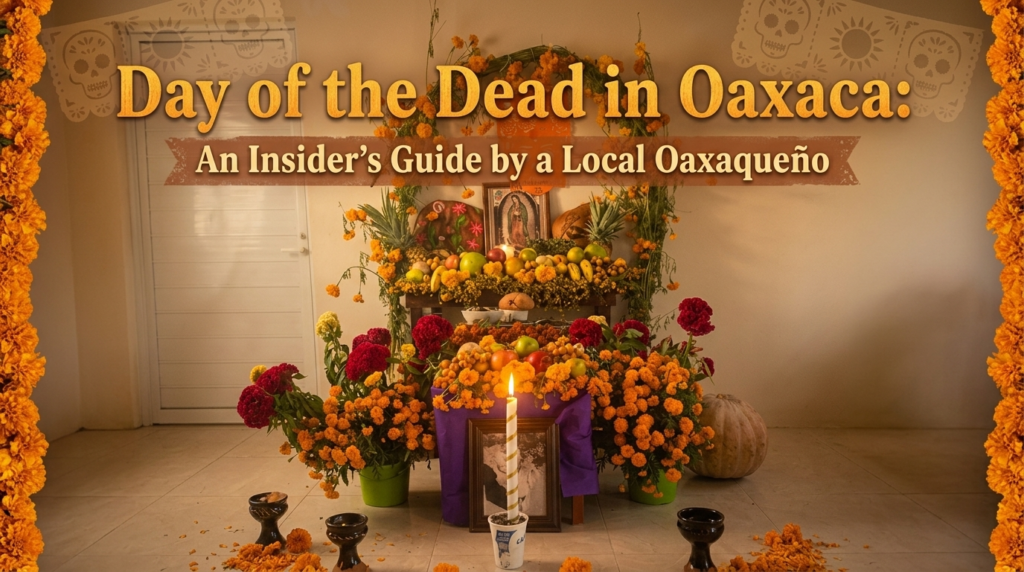
Celebrating the Day of the Dead (Día de los Muertos) in Oaxaca is a truly mystical experience. It is a full sensory journey—a vivid tapestry of golden colors, rich aromas, and deep-rooted memories.
When is Day of the Dead Celebrated in Oaxaca?
While international calendars mark November 1st and 2nd as the official dates, in Oaxaca the celebration begins earlier.
On October 31st, Oaxacan families head to local markets like Central de Abastos or Mercado IV Centenario to buy everything needed for the celebration—fresh flowers, copal incense, fruits, and decorative paper. The atmosphere in the markets is both solemn and festive. That night (often referenced internationally as Halloween night), families gather at home to build their ofrendas (altars) to welcome the souls of their departed loved ones.
The Colors and Symbols Around Oaxaca City
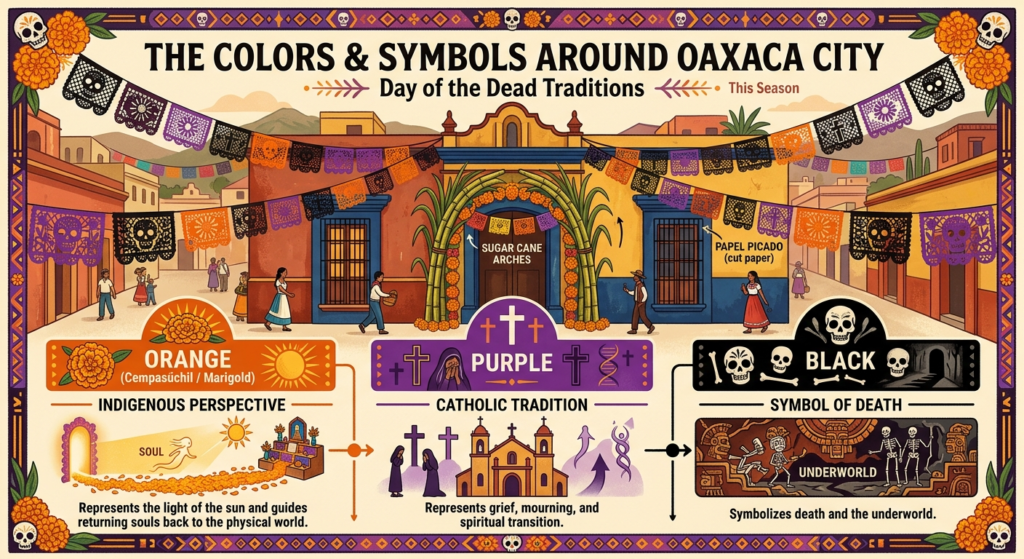
Walking around Oaxaca City during this season, you will find decorated facades adorned with sugar cane arches and strings of papel picado (cut paper) in black, purple, and orange:
Orange (Cempasúchil / Marigold): Represents the light of the sun and guides returning souls back to the physical world from an indigenous perspective.
Purple: Represents grief, mourning, and spiritual transition from a Catholic tradition.
Black: Symbolizes death and the underworld.
What are the Elements of a Oaxacan Altar?
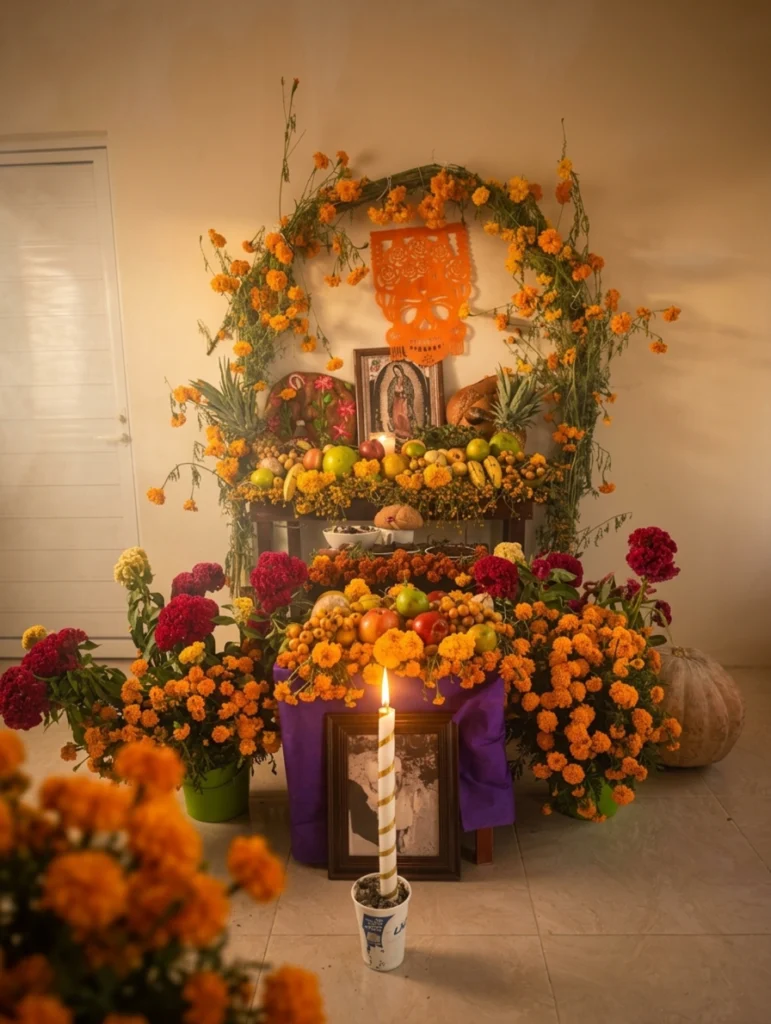
As a native Oaxaqueño, I have to be completely honest and clear: there is no single standard altar version in Oaxaca. Each family, town, and region across Oaxaca has its own unique way to set up an ofrenda.
However, here are the traditional meanings behind the primary elements found on local altars:
Sugar Cane Arch: Represents the sacred portal bridging the material world and the spiritual realm.
Marigold Flowers (Cempasúchil): Provide the path of light and fragrance that guides the souls of our difuntos (deceased relatives) back home.
Photos & Favorite Foods: Photographs honor the ancestors we remember and celebrate. Traditional dishes like mole, tamales, hot chocolate, and mezcal are served to nourish visiting spirits.
Candles & Catholic Images: Candles illuminate the path from a religious perspective, accompanied by Catholic saints or crosses.
Pumpkins: Symbolize the conclusion of the seasonal agricultural harvest.
What Do Oaxacans Do During Day of the Dead?
Celebrations in Oaxaca encompass both quiet reverence and vibrant community festivities:
Solemn Vigils (Velaciones): Many families prefer to honor their relatives in a solemn way. They visit local graveyards (panteones) to stay up all night velando (keeping vigil) over the tombs, cleaning gravesites, lighting candles, and sharing family memories.
Festive Celebrations (Comparsas and Muerteadas): Others prefer to celebrate through music, street parades, and midnight dancing across town neighborhoods.
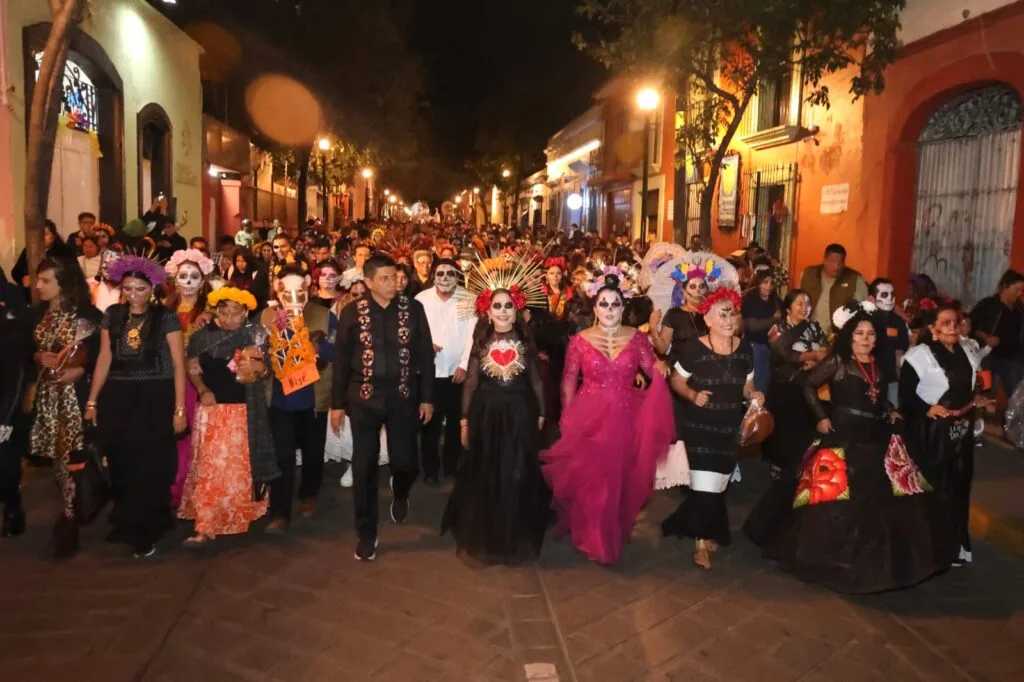
What are Comparsas and Muerteadas in Oaxaca?
While the altar is where we quietly honor our ancestors at home, the streets are where we celebrate their return with the entire community.
1. Comparsas: The Festive Street Parades
A comparsa is a joyous, music-filled theatrical procession. Neighborhoods, cultural groups, and families organize these parades to dance through the cobblestone streets.
The Atmosphere: Led by bandas de viento (brass bands), participants dress up in elaborate costumes—from traditional Catrinas to satirical figures—dancing from house to house, sharing mezcal and traditional bread along the route.
The Meaning: It is an expression of joy. Rather than fearing death, we dance alongside it, reminding ourselves that life and death are part of the same continuous cycle.
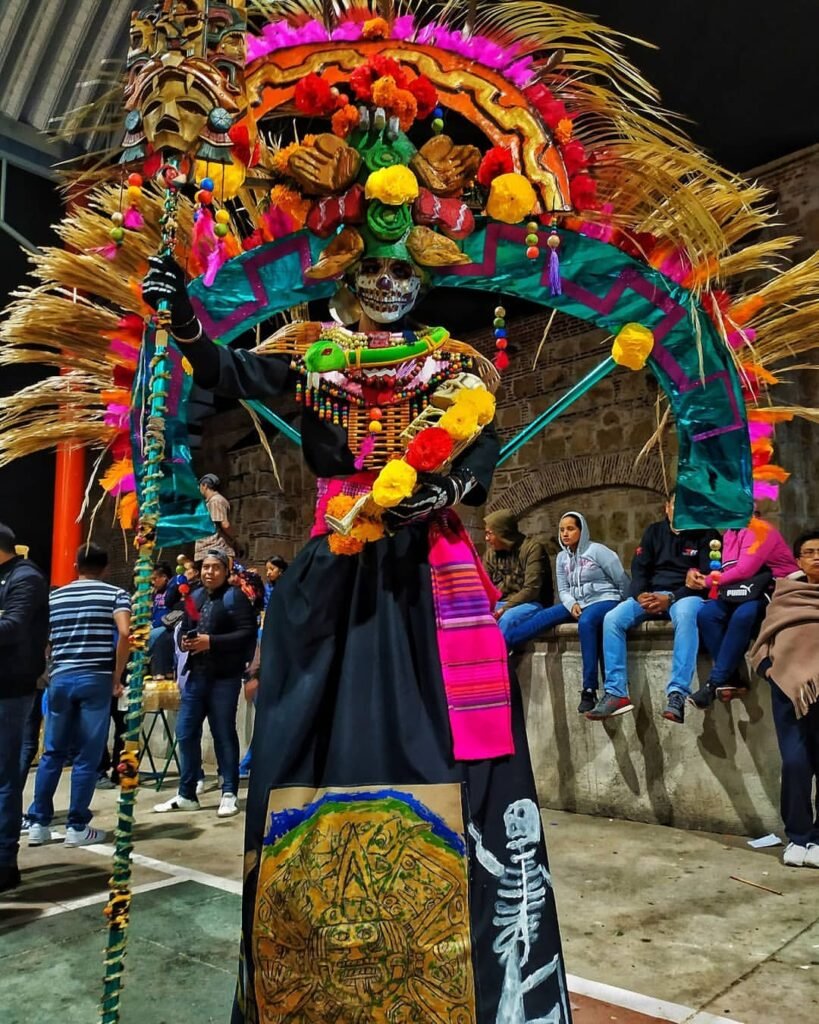
2. Muerteadas: The Theatrical Tradition of the Valley
In the Etla Valley (such as San Agustín Etla or Villa de Etla), you will experience the muerteada—a distinct, deeply rooted community tradition that lasts all night long.
The Performance: A muerteada combines an outdoor theatrical performance with a massive street procession. Participants spend months crafting intricate costumes covered in hundreds of tiny mirrors, bells, and elaborate embroidery.
The Story: The drama revolves around a comedic story: a character dies, and the community—consisting of characters like the Doctor, the Priest, the Devil, the Old Man, and Death itself—tries to bring the person back to life while outsmarting Death through humor.
What is the Origin of Comparsas and Muerteadas in Oaxaca, Mexico?
The origins of these street celebrations trace back to a blend of indigenous worldviews, Catholic evangelization, and 19th-century social satire:
Pre-Hispanic Roots: Mesoamerican cultures viewed death as a natural transition where spirits temporarily returned to interact with the living. Music and communal gatherings were essential to welcome visiting souls.
Colonial Influence: Catholic friars introduced festive theatrical plays (autos sacramentales) to teach religious concepts. Over time, Oaxacans adapted these allegories into local street theater.
19th-Century Satire: As working-class communities formed in the valleys around Oaxaca City, neighbors organized mock-processions. These allowed locals to poke fun at authority figures and landlords under the protection of masks, strengthening community ties through shared humor.
Tips for Visitors: How to Experience Day of the Dead Respectfully
As Oaxacans, we love opening our doors and sharing our culture with visitors from around the world. However, because Día de Muertos is deeply personal and spiritual for local families, keeping a few etiquette guidelines in mind ensures a positive experience for everyone:
Remember That Graveyards Are Sacred Spaces: Cemetery vigils (velaciones) are real moments of grief, memory, and reunion for families. When visiting panteones like Xoxocotlán or San Felipe del Agua, keep your voice low, avoid stepping on decorated graves or altars, and give families privacy.
Always Ask Before Taking Photos: While comparsas on public streets are lively and open to photo ops, cemetery vigils and private altars are intimate. Always ask for permission before taking close-up photos of individuals, family gravesites, or private ofrendas.
Support Local Artisans and Markets: Buy your marigolds, copal incense, candles, and traditional pan de muerto directly from local vendors at neighborhood markets (mercados). Supporting local makers directly benefits the families preserving these traditions.
Dress Comfortably and Be Prepared for Late Nights: Both cemetery vigils and comparsas take place late at night and into the early morning hours. Wear comfortable walking shoes for uneven cobblestones and dress in layers, as Oaxacan autumn nights can turn chilly.
Accept Hospitality with Gratitude: If a local family invites you to view their home altar or offers you a piece of pan de muerto, hot chocolate, or a shot of mezcal, accepting gracefully is a meaningful sign of mutual respect.
Final Thoughts: Why Oaxaca’s Day of the Dead Touches the Heart
The Day of the Dead in Oaxaca is far more than a colorful festival or a seasonal spectacle—it is a living testimony to love, memory, and community. It is the one time of year where the boundary between the material and spiritual worlds fades, allowing us to sit down once more with those who shaped our lives.
Whether you find yourself quietly reflecting beside flickering candles in a cemetery or dancing down a cobblestone street surrounded by brass music and friendly faces, you will quickly realize that in Oaxaca, we do not mourn death—we celebrate the enduring connection of life and family.