
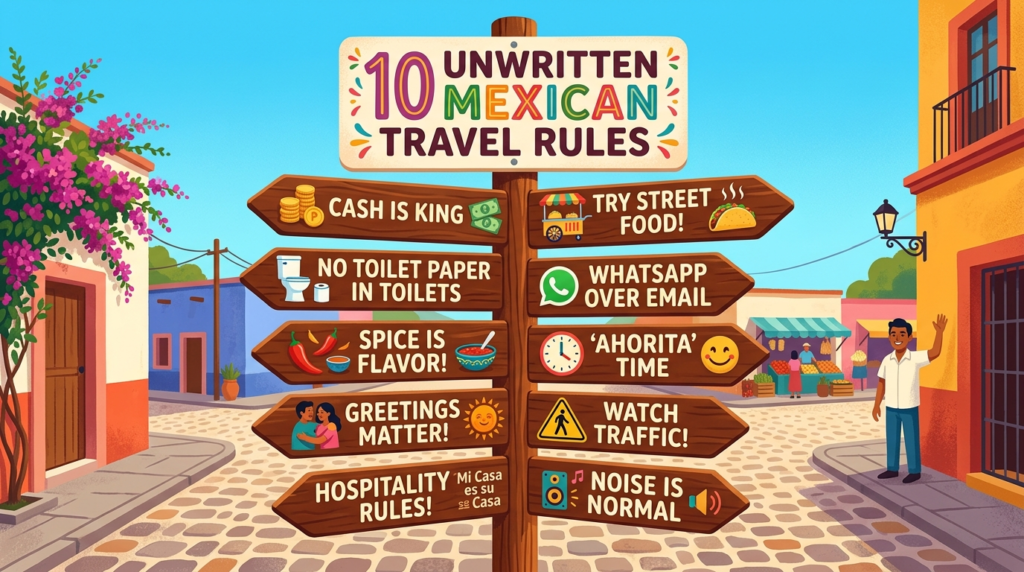
Mexico is an incredible destination filled with rich history, world-renowned gastronomy, and breathtaking natural landscapes. But beyond what standard guidebooks tell you, daily life here operates on a set of unwritten cultural rules and subtle local expectations.
Whether you are planning your first visit or returning to explore deeper, understanding these everyday realities will save you time, prevent misunderstandings, and help you travel like a seasoned insider.
Here are the 10 unwritten Mexican travel rules you need to know before your next trip to Mexico.
1. Cash Is King (Keep Small Bills Ready)
While credit cards are standard at major hotels, chain supermarkets, and upscale restaurants, cash (efectivo) remains essential for everyday life in Mexico. Street food vendors, local markets (mercados), taxis, small neighborhood stores (abarrotes), and tips all require cash.
Pro Tip: Always break larger 500-peso bills at convenience stores like OXXO or larger supermarkets. Street vendors and taxi drivers often do not have change for large denominations, so keep plenty of 20, 50, and 100-peso notes in your wallet.
2. Street Food Is the Soul of Mexican Identity
Street food is far more than just a quick, affordable bite—it is the beating heart of Mexican culture and social connection. From regional staples like Oaxacan memelas and tlayudas to late-night tacos al pastor, eating at street stalls (puestos) is an unmissable experience.
If you are nervous about hygiene, look for the stalls with long lines of locals and high turn-over. If a stand is busy, the ingredients are fresh, and the food is cooked right in front of you.
3. Plumbing Realities & Public Restrooms
In most regions across Mexico, municipal drainage systems are not designed to process flushed toilet paper. You will almost always see a small trash can placed next to the toilet meant specifically for paper waste.
Additionally, public restrooms—especially at bus stations, historical sites, and government offices—often charge a small entry fee (usually 5 to 10 pesos). These facilities may not always provide toilet paper at the stall, so carry a pocket pack of tissues and a few coins with you wherever you go.
4. WhatsApp Replaces Email
If you need to contact a local tour guide, confirm a reservation at a boutique hotel, message an Airbnb host, or check business hours, do not rely on email. WhatsApp is the primary communication channel across Mexico for both personal life and commercial services.
Downloading WhatsApp before your trip will make communicating with local businesses instant and hassle-free.
5. Soundscapes Are Part of Everyday Culture
Mexico is a vibrant, lively country, and its soundscape reflects that energy. From neighborhood gas trucks and scrap-metal collectors broadcasting recorded jingles to early-morning firecrackers (cohetes) during local festivities, live brass bands in the main plaza (zócalo), and barking street dogs, ambient noise is a natural backdrop to daily life.
Rather than viewing it as a disruption, treat the soundscape as part of the country’s dynamic atmosphere and cultural rhythm.
6. Spice Is About Flavor, Not Just Heat
Salsa in Mexico is not merely a spicy condiment; it is an artisanal element of every dish designed to balance and elevate flavors. Every table will usually offer multiple salsa options, ranging from fresh salsa verde to deep, smoky salsa macha.
When asking a local if a dish or salsa is spicy, keep in mind that local tolerance is high. If someone tells you a salsa “no pica mucho” (it’s not very spicy), assume it still carries a noticeable kick if you are not accustomed to chili peppers!
7. Understanding “Ahorita” and Mexican Time
Time in Mexico tends to be relaxed and relational rather than strictly linear. You will frequently hear the word ahorita, which literally translates to “little now.” However, ahorita can mean anything from “in two minutes” to “in a few hours,” or even “not right now.”
Embracing a flexible schedule and exercising patience will help you navigate public transport, service timing, and daily plans with ease.
8. Etiquette: Warmth, Greetings, and “¡Buen Provecho!”
Politeness and personal warmth are core values in Mexican etiquette. It is customary to acknowledge people when walking into a small shop, café, or elevator with a friendly “Buenos días” (Good morning) or “Buenas tardes” (Good afternoon).
When walking past people who are eating in a restaurant or at a street stall, it is polite to say “¡Buen provecho!” (or simply “¡Provecho!”), which means “Enjoy your meal.”
9. Pedestrians Do Not Always Have the Right-of-Way
Unlike in traffic systems where cars automatically yield to pedestrians at marked crossings, vehicle drivers in many Mexican cities expect pedestrians to wait for a clear gap before stepping into the street.
Always look both ways carefully before crossing, even on one-way streets or designated crosswalks, and never assume an oncoming vehicle will slow down.
10. Hospitality and the Spirit of “Mi Casa Es Su Casa”
Generosity toward visitors is deeply embedded in Mexican hospitality. Phrases like “Mi casa es su casa” or people stopping to give detailed directions when you look lost come from a genuine pride in welcoming travelers.
Showing genuine appreciation, using basic Spanish phrases, and approaching local traditions with respect will open doors to memorable conversations and authentic cultural connections.
Final Thoughts for Your Trip
Navigating these unwritten cultural customs will transform your journey from an ordinary vacation into a deeply rewarding travel experience. With a little cash in your pocket, an open mind, and a flexible attitude, you’ll be fully prepared to experience the best of Mexico.