
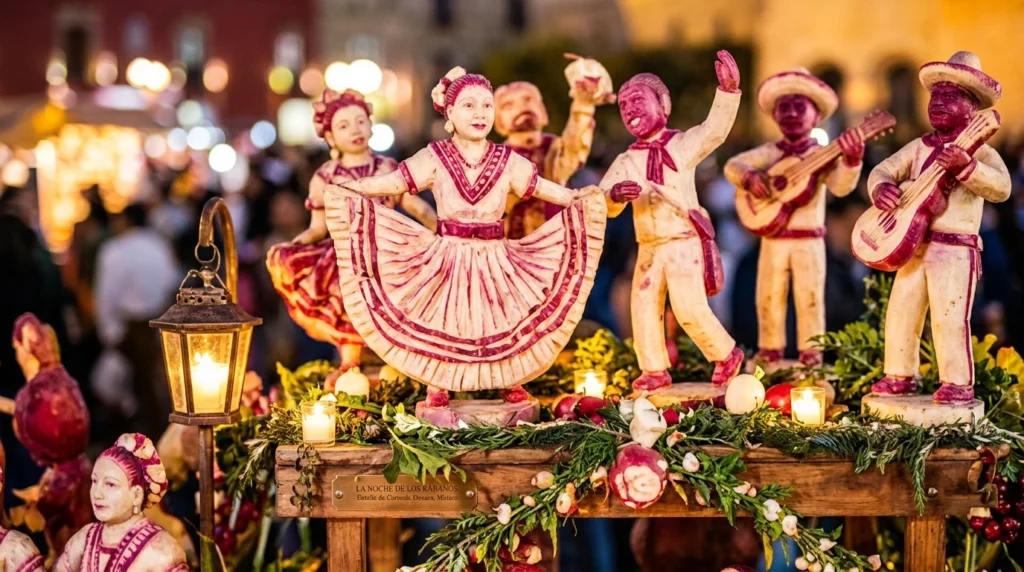
Oaxaca is widely celebrated as the cultural hub of Mexico—a vibrant southern state where history, gastronomy, and fine art seamlessly intersect. While many travel to Oaxaca for its world-famous mole, mezcal, and Day of the Dead festivities, December holds one of the most surreal and captivating folk-art celebrations in the world: The Night of the Radishes (La Noche de Rábanos).
Every year on December 23rd, the central plaza of Oaxaca City transforms into an open-air gallery featuring intricate sculptures carved entirely out of oversized radishes, complemented by delicate creations made from corn husks (totomoxtle) and dried flowers (flor inmortela). It is an ephemeral masterpiece of tradition, creativity, and community pride that lasts for just a single night.
The History and Colonial Origins (1897–Present)
The roots of the festival trace back to the colonial era. Dominican friars introduced flowers and vegetable cultivation to the indigenous Zapotec and Mixtec farmers of the Oaxaca Valley.Before Christmas in Oaxaca, at the annual Christmas Eve market (Víspera de Navidad), vendors began carving shapes into their vegetables—arranging them artfully on palm leaves alongside dried flowers to attract buyers.
By December 23, 1897, the tradition had grown so popular that Mayor Francisco Vasconcelos established an official annual contest known as Noche de Rábanos. What began in the historic Plaza del Marqués (now known as the Jardín de la Constitución or the Zócalo) has evolved into an internationally recognized cultural spectacle.

Not Your Average Salad Radish: The Special Carving Cultivation
One of the most surprising aspects of La Noche de los Rábanos is the vegetable itself. These are not the small, crisp radishes you find in a grocery store salad bar.
Massive Proportions: Grown specifically for the event in the nearby Oaxaca City in a recreational forest known as El Tequio located in Santa Cruz Xoxocotlán, these heavy-duty radishes can reach up to 50 centimeters (nearly 20 inches) in length and weigh over 3 kilograms (6.6 pounds).
Specialized Agriculture: The radishes are planted between September and Octoberand they are heavily fertilized and left in the ground long past normal harvesting times so they mutate into complex, twisted shapes, providing natural limbs, torsos, and whimsical geometry for carvers.
Extreme Ephemerality: Harvested just days before December 23rd, the sculptures begin to oxidize and lose their firmness within hours of exposure to air. This race against time creates an incredible urgency—visitors have an extremely brief viewing window to admire the displays before they decay.
Masterpiece Themes and Festival Categories
Carvers spend months planning their concepts and working continuously through the night of December 22nd to carve their entries. The competition is split into distinct visual themes and material categories:
Religious Imagery
La Virgen de Guadalupe, La Virgen de la Soledad (Oaxaca’s patron saint), La Virgen de Juquila, and detailed Nacimientos (nativity scenes).
Oaxacan Daily Life & Folklore
Calendas (festive parades), comparsas, muerteadas, traditional band musicians, and scenes from the annual Guelaguetza.
Pre-Hispanic & Indigenous Roots
Representations of Quetzalcoatl, ancient Zapotec deities, and scenes from Monte Albán or Mitla.
Companion Craft Categories
Beyond carved radishes, the festival highlights two other traditional Oaxacan craft forms:
Totomoxtle (Dried Corn Husks): Artisans create delicate, complex figures and multi-tiered dioramas using natural and dyed corn husks.
Flor Inmortela (Dried Flowers): Sculptures crafted using naturally dried flowers (Gomphrena globosa) that retain their brilliant colors indefinitely.
How Oaxaca’s Ephemeral Art Compares Globally
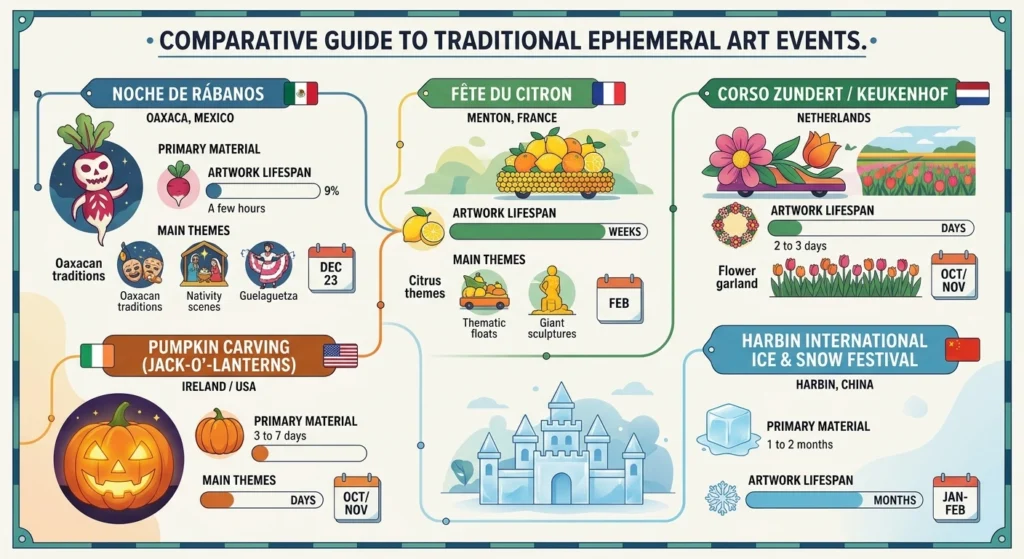
While La Noche de los Rábanos is completely unique in its primary medium, it shares a core philosophy with other international festivals centered on botanical/organic sculpture, seasonal traditions, and ephemeral art.
Comparative Infographic of Traditional Ephemeral Art Events Around The World
Key Differentiating Points: What Makes Oaxaca Stand Out?
Unmatched Ephemerality: Unlike the citrus structures in Menton or the ice palaces in Harbin that last for weeks, the Oaxacan radish oxidizes rapidly. The December 23 exhibition has an exceptionally fleeting viewing window, making every second in front of the sculptures feel exclusive.
Intricate Detail vs. Massive Scale: While events like Corso Zundert lean into grand scale with sculptures reaching 10 meters high, the Night of the Radishes stands out for its extreme miniaturization and relief carving, working delicately around the organic, whimsical shapes of the root.
Deep Narrative Intent: While many global seasonal festivals lean toward modern aesthetics or a broad carnival atmosphere, the Oaxacan competition remains deeply connected to local history, indigenous heritage, religious iconography, and regional folklore.
Practical Guide for Visitors (December 23rd)
If you plan to experience La Noche de los Rábanos in person, preparation is key:
Location: The main event takes place around the perimeter of the Zócalo (Jardín de la Constitución) in downtown Oaxaca City.
Timing & Line Logistics: The official judging starts in the late afternoon on December 23rd, but the line to view the stands begins forming by midday. Expect to wait anywhere from 2 to 4 hours in line.
Best Strategy: Queue up either very early in the afternoon before the main crowds arrive, or later in the evening after 9:00 PM when the main line begins to move faster.
Admission: The event is completely free to the public. Winners across each category receive cash prizes, and front-page recognition in local newspapers.